Minds Aren't One-Size-Fits-All. Events Shouldn't Be Either
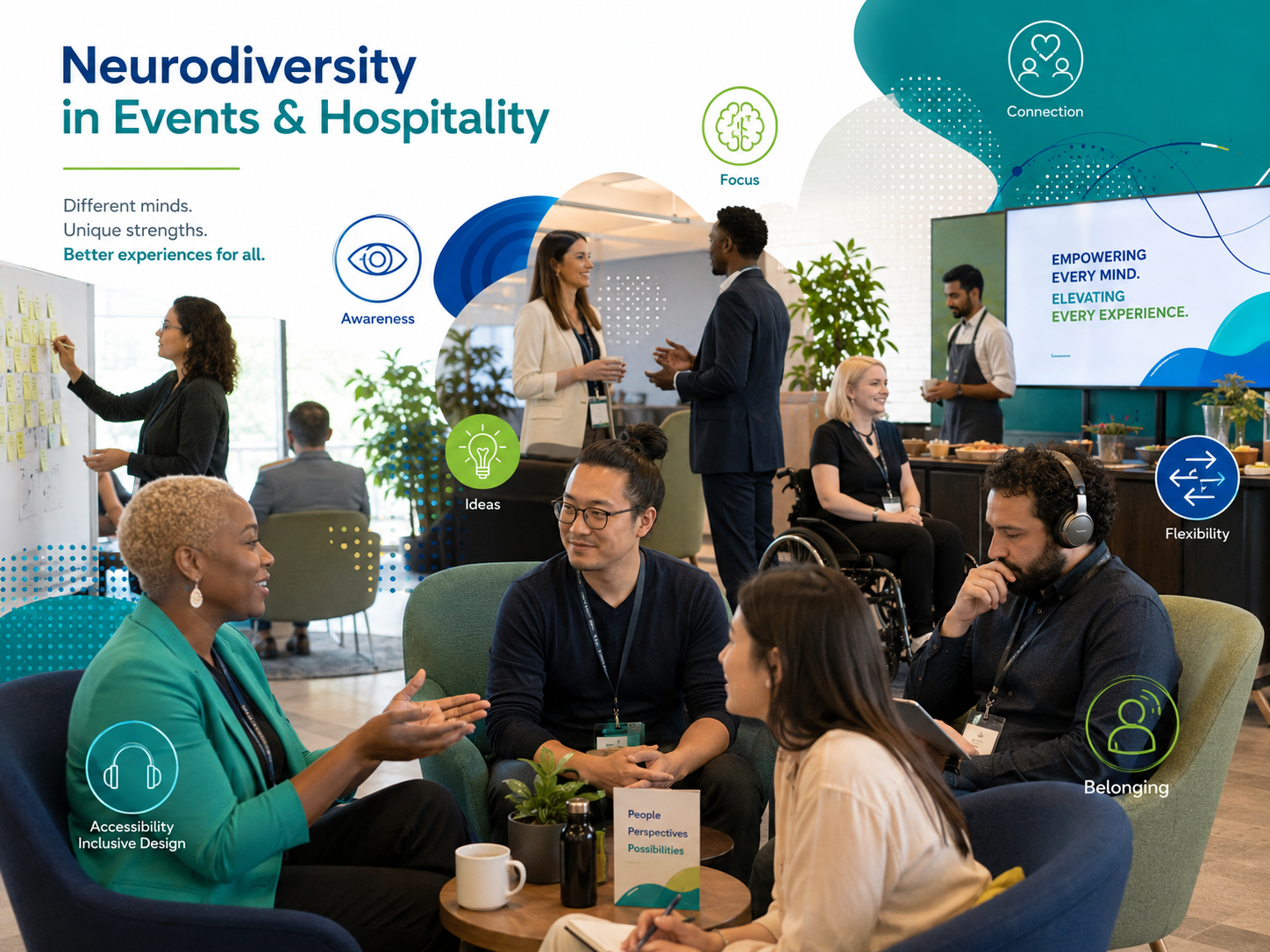
Picture a ballroom at 9am on day one of a conference: Fluorescent lights buzzing like they're auditioning for a horror movie, a mic testing at full volume, a facilitator chirping "turn to your neighbor and share something nobody knows about you!" For some attendees, this is a Tuesday. For others, this is the moment their nervous system files for early retirement.
We talk a lot in this industry about who's in the room and whose needs get considered when we're building an experience. Neurodiversity tends to get left off that list - not out of malice, just because it's rarely the first box anyone thinks to check when they're staring at a floor plan and a run-of-show.
Researchers estimate 15-20% of people are neurodivergent - ADHD, autism, dyslexia, sensory processing differences, and more. That's not a niche, it's a meaningful chunk, and it affects your attendees whether it’s designed for it or not.
What Neurodiversity Means for Event Design
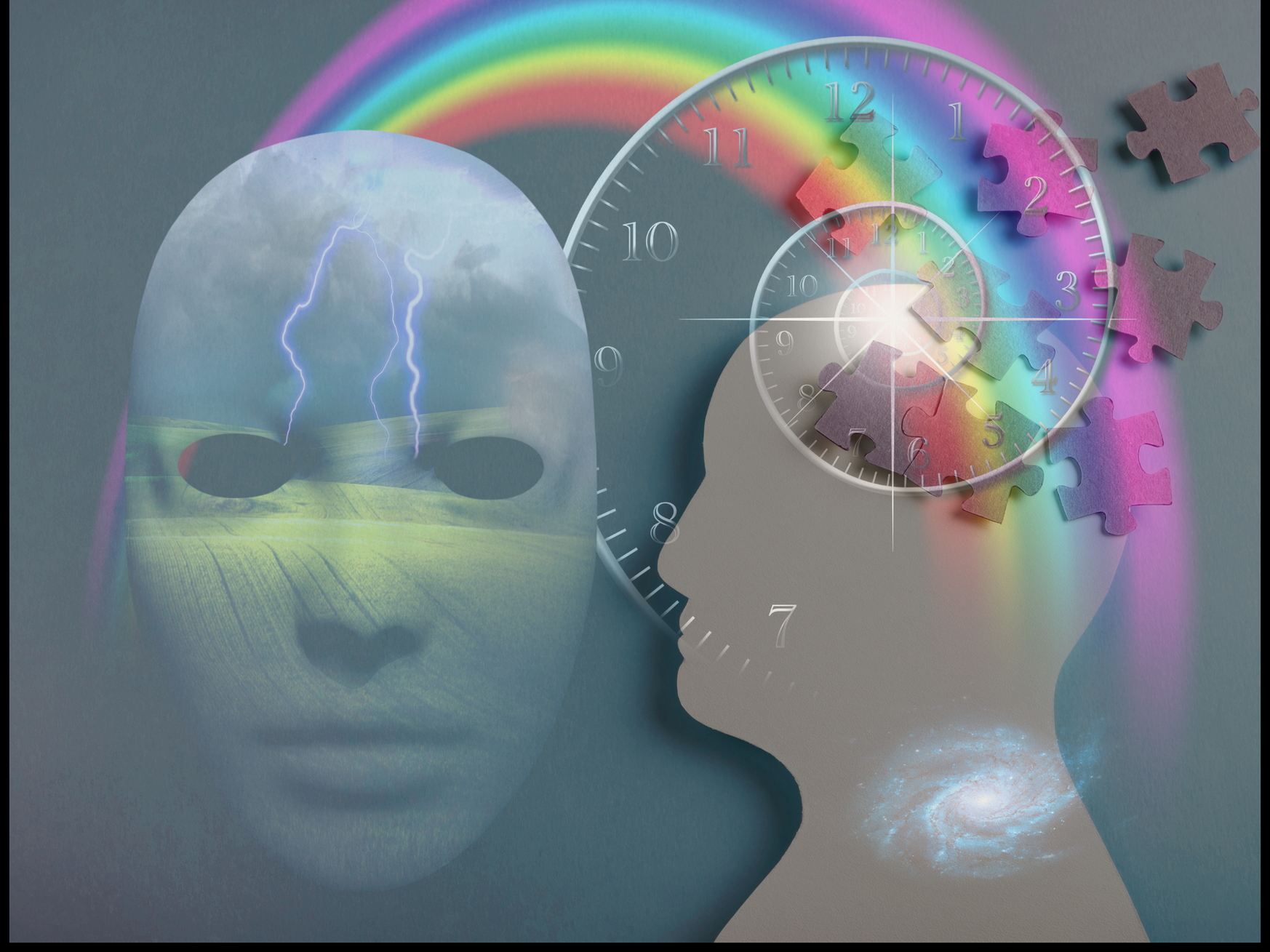
Neurodivergent doesn't mean "high maintenance" or "needs extra help." It means a brain that processes sound, light, social interaction, and information a little differently than the default settings most events are built on. The default? The brain that can shrug off overhead fluorescents, roll with sudden schedule pivots, and take a mic shoved in its face without blinking.
Good news: the fix isn't a bigger budget. It's better attention.
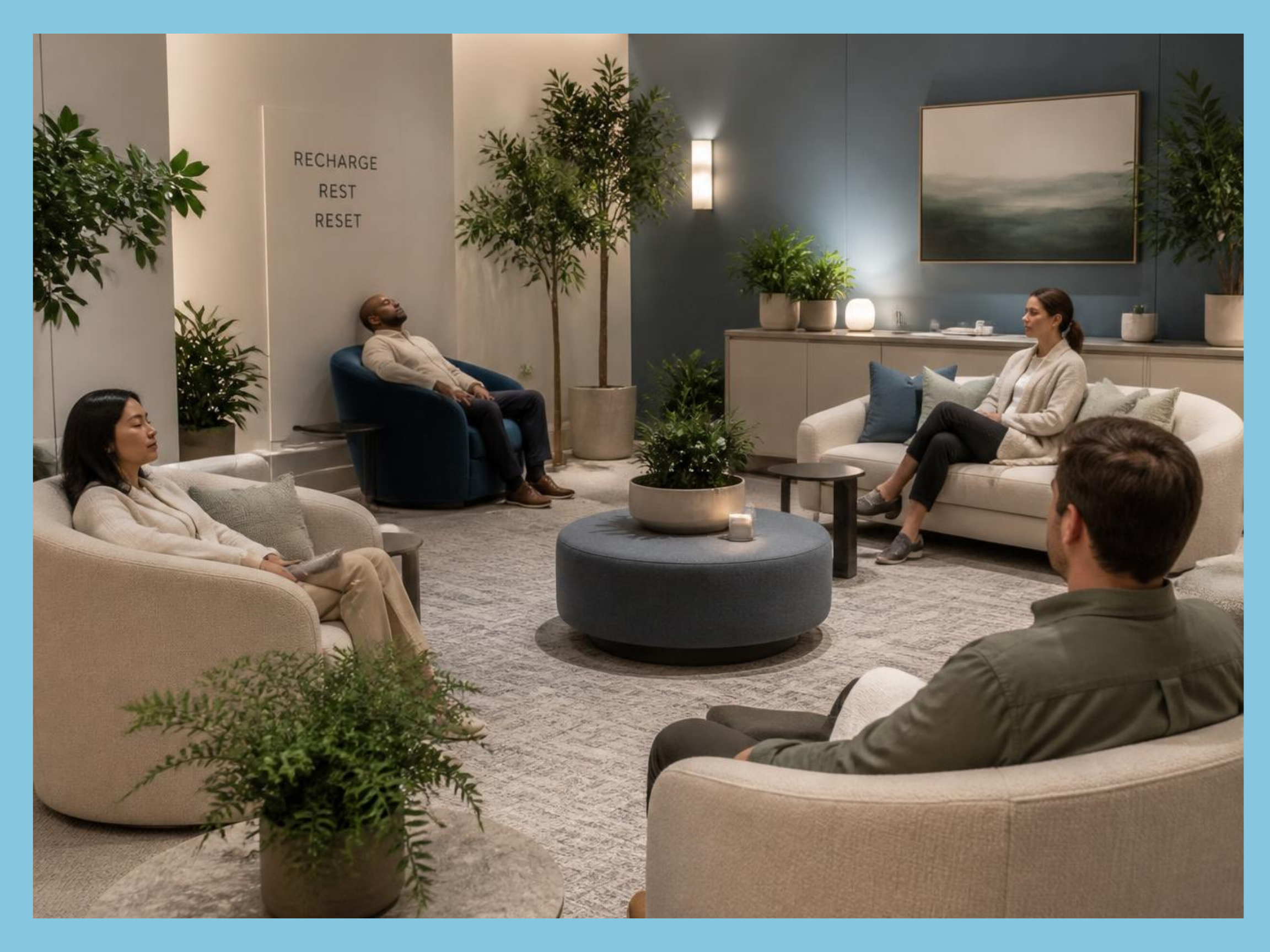
Reprieve spaces… at this point, a dedicated reprieve space is basically non-negotiable on any larger event I design. No phones. Soft lighting instead of the standard fluorescent interrogation-room glow. Calm, low music or nature sounds in the background instead of dead silence or a wall of noise. Comfortable seating - not a stackable ballroom chair that was clearly designed by someone who never had to sit in one for a length of time. Maybe a diffuser running something calming in the corner. Ten quiet minutes and people come back rejuvenated and functional instead of frayed. Once attendees find it, they use it. If an event has one I will check it out every time.
Natural light over fluorescent, always. It’s a hill to die on if you had to pick one. Raising the shades costs nothing and instantly changes the entire chemistry of a room. Fluorescent lighting is the industry's villain era. Let's retire it.
Written agendas, not just verbal ones. Some brains process best visually on the page, not live and in real time. Post it. Print it. Send it ahead. It takes five minutes and removes an entire layer of stress for a lot of people.
Predictability wherever you can manage it. Clear signage, published schedules, minimal surprise pivots. Sudden change is stressful for most humans. For a brain that leans on structure to feel steady, an unannounced room swap can knock the whole day sideways.
Rethinking the breakout. This one doesn't get talked about nearly enough. Most breakout activities and icebreakers are built for the person who has zero hesitation raising a hand, sharing something personal with total strangers, or thinking out loud in a circle of eight. That's a very specific kind of comfortable, and it is NOT universal. Being put on the spot to perform extroversion is its own quiet nightmare for plenty of people, neurodivergent or not. Offer alternatives: a written reflection alongside the group share, a pair conversation instead of a full-room spotlight, permission to observe first and contribute when ready instead of being cold-called. Nobody loses anything by building in that flexibility. The people who need it will feel it immediately.
Flip the Lens: The Hospitality Workplace
You're not only designing rooms for other people's neurodivergent brains - many of you likely have one. Our industry is attractive to our brains that like creativity and multitasking. The problem is that whether we’re aware of this or not, we rarely slow down enough to ask and ponder how that’s working for us.
Hospitality and events work is a sensory buffet: long shifts, constant noise, last-minute curveballs, back-to-back social interaction with zero built-in recovery time. Attractive to our dopamine receptors? Yes. Recipe for burnout? Also yes. If you're managing a team, small shifts move the needle fast - a quiet backstage or break area away from guest-facing chaos, async updates instead of everything happening live in a group huddle, written expectations instead of assuming everyone absorbs verbal instructions the same way, flexibility around when and how breaks actually happen.
None of this lowers the bar. It removes friction that has nothing to do with someone's skill or work ethic and everything to do with an environment that wasn't built with their brain in mind in the first place.
Why This Belongs in the Business Case, Not the Feel-Good Foo-Foo Column
At OmniEra, wellness was never meant to be a spa day squeezed in between sessions (though we love our spa days), it's threaded through the bones of the experience, and that includes how minds work, not just bodies. Teams that feel supported collaborate better. Attendees who aren't overstimulated retain more, network more, and remember your event fondly instead of just surviving it. This isn't the soft, optional add-on. This is the design.
The best part? Most of these shifts cost close to nothing. A reprieve space. A raised shade. A written agenda. An alternative to the forced share-out. Small, intentional adjustments that tell every person in the room - whatever kind of brain they walked in with - that they were truly thought about, not an afterthought squeezed in at the last minute.
What's one adjustment you could try at your next event or on your team this month? We'd love to hear it. Reach out and let's talk about building spaces - and workplaces - that work for every kind of mind, not just the loudest one in the room. 😊