Learning and Training My AI: Notes From an Events Nerd

I’ve started the final course in my digital marketing program at UC San Diego, and the title alone makes me squint: AI and SEO. Fascinating, and also a little over my head at first glance. I’ll take it.
I’ve sat through my share of AI sessions at industry events. A few had real nuggets. Many stayed on the surface: optimize your LinkedIn headline, speed up your run of show. Useful, and most of us have those handled by now. What gets skipped is what matters when real money, real guests, and real reputations are on the line. Let’s talk about that.
Training Your AI (Yes, It Needs Training)
I love using AI for research. Comparing hotels, resorts, and properties on pricing and amenities used to swallow hours of my week. But AI doesn’t know your standards until you teach it, and I’m still teaching mine. (Looking at you, Claude).
Here’s my sourcing order that I keep reminding my AI about:
Direct with the hotel or its group sales manager.
Trusted intermediaries when I don’t have a direct contact. Peers at ALHI, Teneo, and Preferred Hotels are people I can actually call (and they pick up).
My FORA Travel platform for individuals and groups under 10.
A very short list of highly reputable platforms I have agreements with as an advisor.
Lesser-known third-party sites? Not for me, and not for my clients.
The catch: ask AI to compare options and it will happily pull in a long list of third-party companies most of us have never heard of, often leading with the lowest price. The cheapest number on the screen feels like a win until it isn’t. Even the bigger, better-known names carry some risk. Do you really want to roll the dice when your reputation at work or your peace of mind on vacation is on the line?

When the Gamble Goes Wrong
Two stories, because I’d rather you hear them than live them.
Recently in Las Vegas, travelers booked hotels called Palette and Collection O. According to reporting, the listings used AI-doctored photos and fake names, and they appeared across major booking sites. Guests arrived to find they’d landed at OYO, the exact property many of them were trying to avoid. I covered the full story right here.
The second one hit closer to home. A friend booked a place through a third-party site (which shall remain nameless) that looked lovely online. She arrived with her family and discovered it wasn’t a hotel at all. It was an apartment, and she didn’t feel safe there. She called the third party, who said there was nothing they could do. Canceling that same day meant paying at least the first night, possibly the whole stay. Her family had to choose between their safety and their money.
The common thread: when something breaks, who picks up the phone? A property contact I know by name does. A chat window at a company with no face does not.
What a Pro Knows to Question
This has come up a couple of times in recent months. I’m researching properties in a certain area, and one hotel’s rate is noticeably lower than I’d expect for that brand or type of property. AI presents that as a deal. A professional sees the number and thinks: why?
Then I dig: Sometimes the answer is that a wing is under construction. AI doesn’t know about the jackhammer next door, but your guests will.
If you’re trying to save money and noise doesn’t bother you, that rate might be a win. If you’re planning an incentive trip or a relaxing getaway where the point is an elevated, restful vibe, it’s a problem. Talk to your planning professional before you book, not after you’ve unpacked.
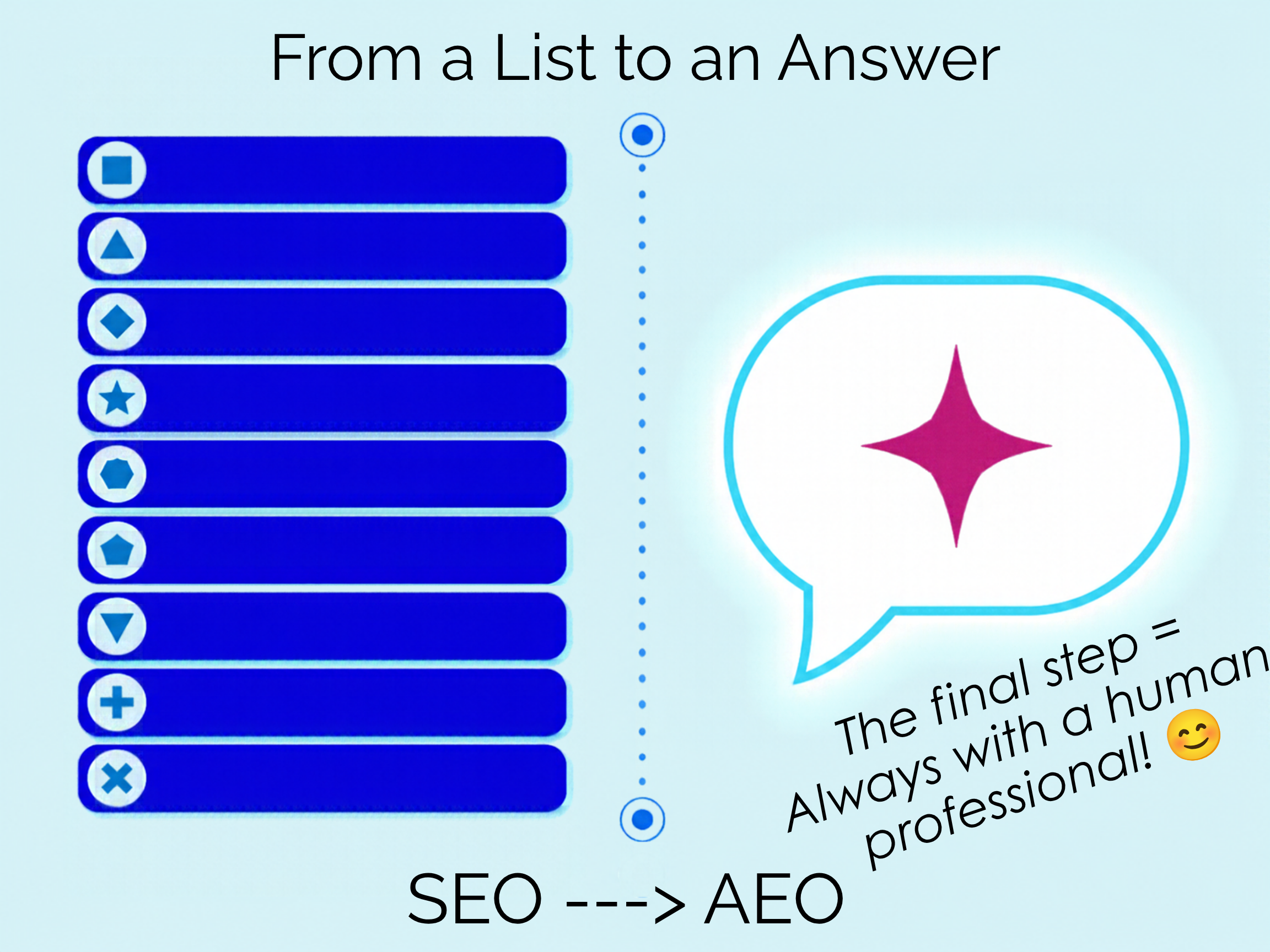
From SEO to AEO
Something I’ve been learning: For more than 15 years, people found businesses by searching Google and choosing from a list of links. That’s SEO, search engine optimization. Now more people skip the list entirely. They ask AI a question and go with the answer. The newer game is AEO, answer (or anywhere) engine optimization: being the business AI names.
AI tends to favor businesses that have been around a while, get talked about online, and have other sites linking to theirs. A long track record plus plenty of mentions reads as credible. That can help established names, and it can hurt smaller or newer businesses, even when they’d be the better fit for you. Showing up in an answer and being trustworthy are two different things.
For my hotel and entertainment friends reading this, your online footprint (reviews, press, mentions, links) now shapes how AI describes you. It’s worth tending.
What to Tell Your AI First
Before you ask for hotel recommendations, give your AI some rules. Feel free to borrow mine:
Prioritize booking direct with the property or its group sales team.
Only suggest well-established booking platforms, and flag any you can’t vouch for.
Point out any rate far below what’s normal for this brand or property so I can find out why.
Tell me what you can’t verify, like real-time availability, final pricing with fees, and current renovations.
Then bring in a human for the last mile. AI is a terrific research partner and a poor stand-in for someone who knows the property.
I’m still learning, and I suspect this class will hand me more notes to share.
What’s one rule you’ve given your AI? Send it my way at Samantha@omnieralife.com or DM on Instagram or LinkedIn @omniera. I might feature the best ones in The Elevated Era. If you’re planning something and want a human in your corner, let’s talk. (Friend with the apartment: you know my number.)